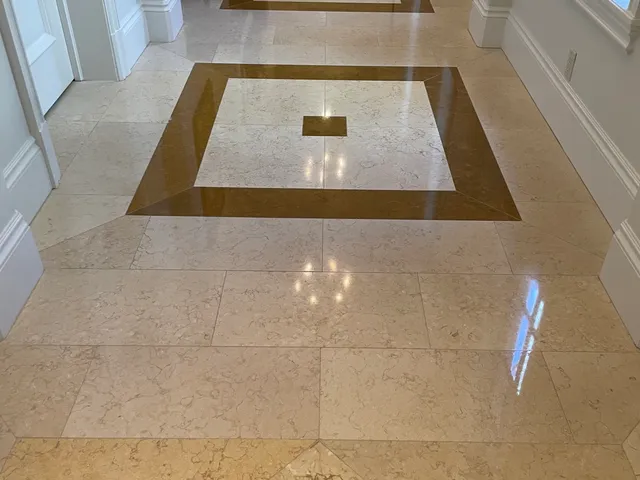
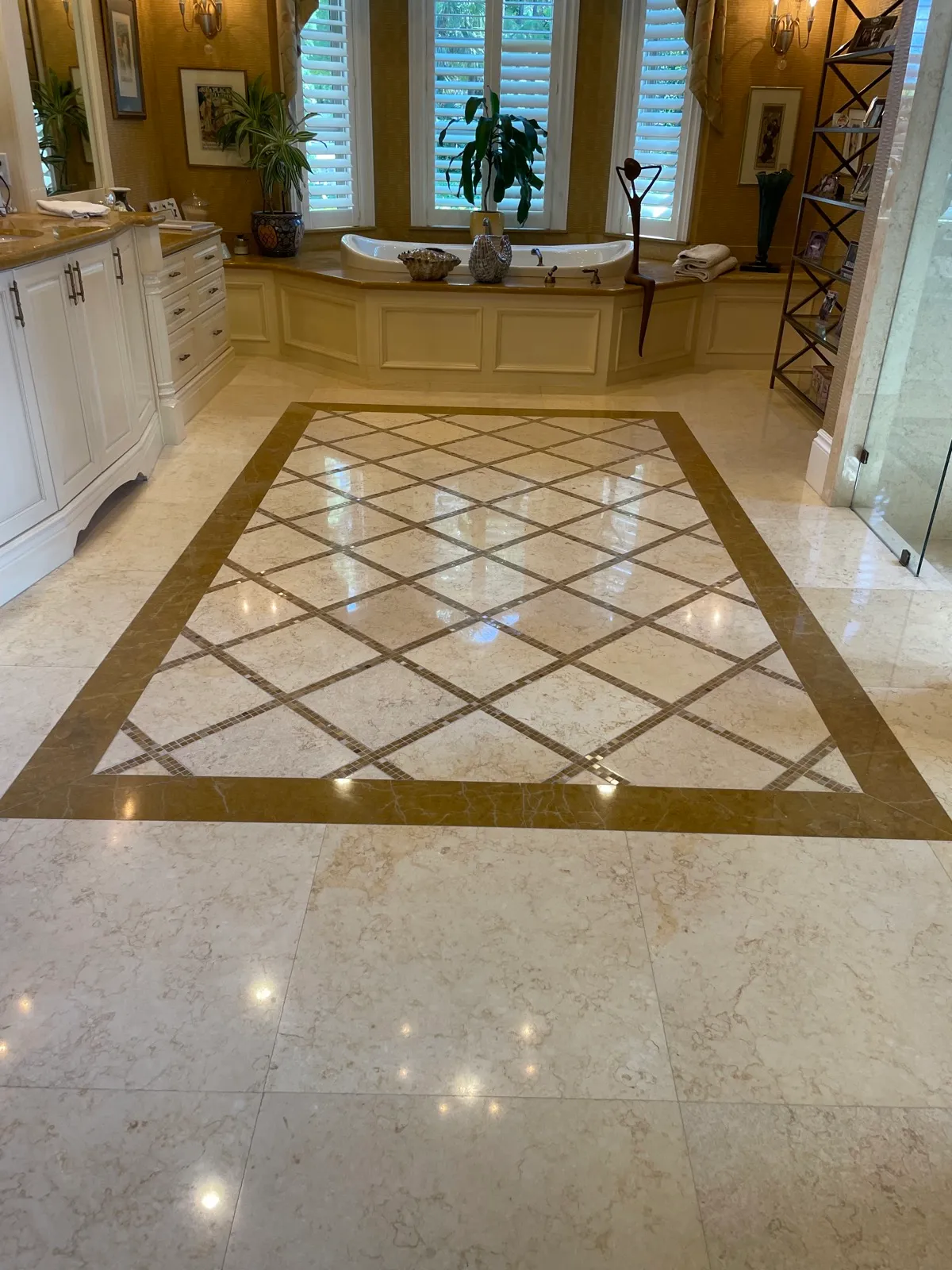
Why natural stone floors go dull
Marble, travertine, limestone and terrazzo are softer and more porous than ceramic tile. They scratch from grit tracked in on shoes, etch when anything acidic touches them, and dull in traffic lanes while the edges of the room stay shiny. Add a few years of the wrong cleaner and the floor looks cloudy, blotchy and tired.
None of that is permanent. The damage is in the top layer of the stone, and restoration removes that layer.
What restoration involves
Every floor is different, so we start with a free assessment and a small test area. From there the work uses some or all of these steps:
| Step | What it does | When it is needed |
|---|---|---|
| Diamond grinding | Removes deep scratches, etching and lippage | Worn, uneven or badly scratched floors |
| Honing | Smooths the stone through finer grits | Every restoration |
| Polishing | Brings up a satin or mirror shine | When you want gloss |
| Crystallization | Chemically hardens and shines the surface | Marble that needs extra durability |
| Hole and chip filling | Fills travertine voids and marble chips | Travertine, damaged marble |
| Sealing | Penetrating sealer against water and stains | Every restoration |
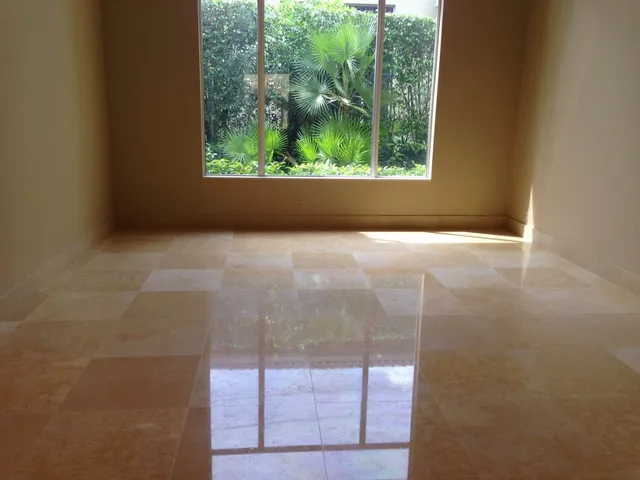
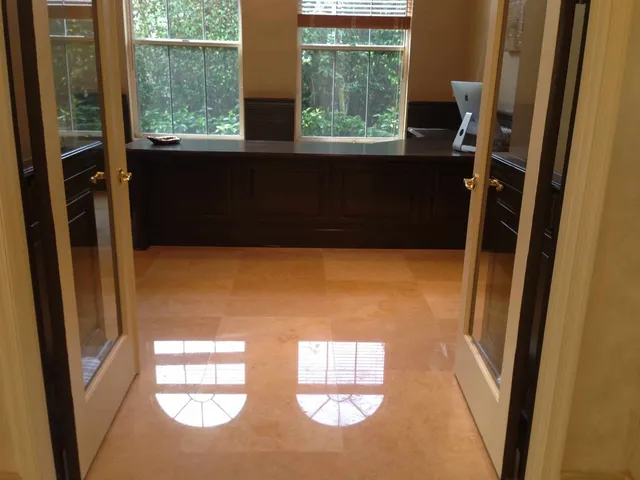
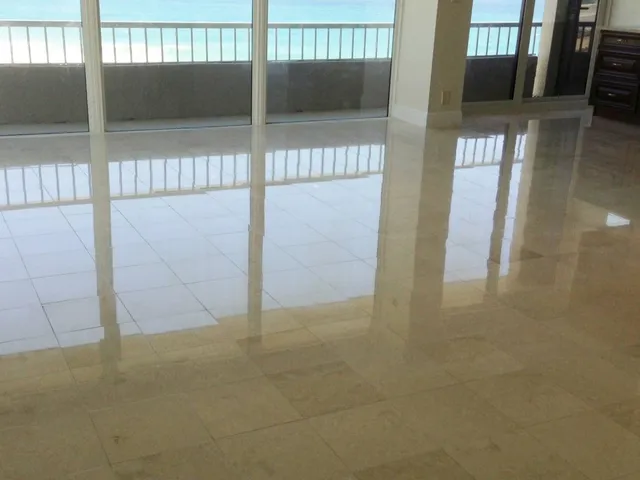
A honed finish is matte and hides wear well. A polished finish reflects light and shows the color and veining in the stone. Both are correct; it depends on the look you want and how the room is used.
Marble and limestone
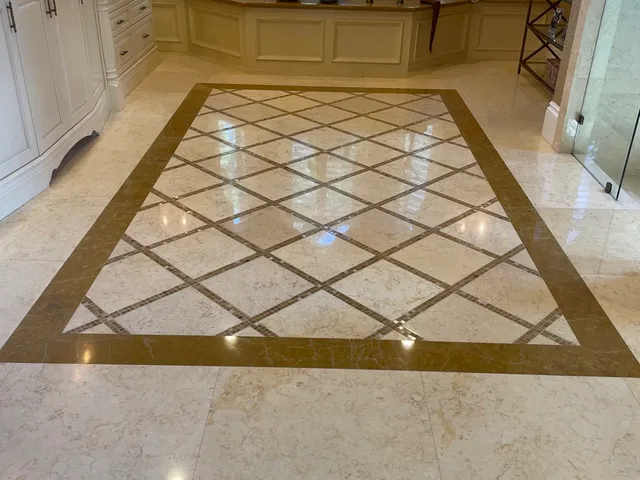
Marble and limestone etch easily. Spilled wine, citrus, vinegar and most household cleaners leave dull spots that look like water marks but do not wipe off. Over time the whole floor goes cloudy. Honing removes the etched layer and polishing restores the shine. We also fill chips and cracks that come from settling or dropped objects.
Travertine
Travertine has natural holes. From the factory they are filled, but the fill pops out over years of use and the holes collect dirt. Restoration includes refilling those holes, then honing and polishing the surface so the fill disappears into the floor.
Terrazzo
Terrazzo, marble chips set in cement or epoxy and ground flat, is everywhere in Palm Beach County homes built from the 1950s through the 1970s. It is often hiding under carpet, vinyl or ceramic tile. Once uncovered and cleaned of adhesive, terrazzo grinds and polishes beautifully and can be sealed to a glass-like finish. It is one of the most durable floors you can own if it is maintained.
Keeping the floor looking restored
Natural stone needs to be sealed regularly, usually about once a year depending on the stone and the traffic. Between sealings, clean only with a pH-neutral stone cleaner. Vinegar, bleach, ammonia and most bathroom products are acidic and will etch the surface.
If you would rather not think about it, ask about our maintenance program. We will come back on a schedule and keep the floor at the finish you chose.